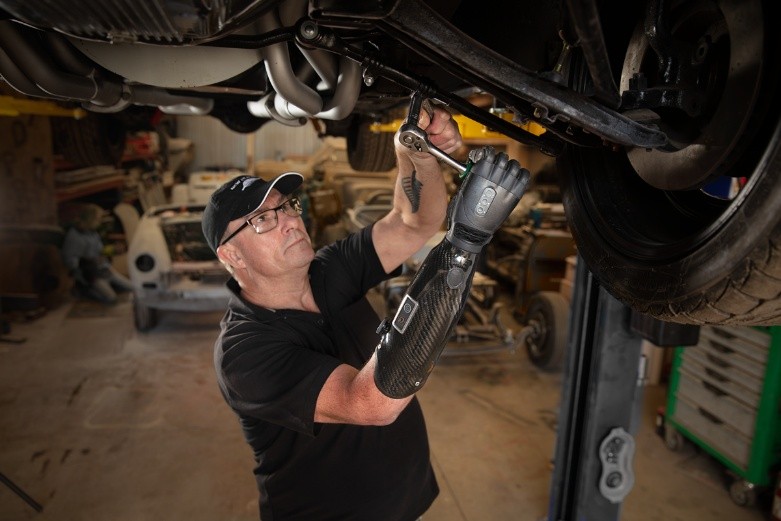
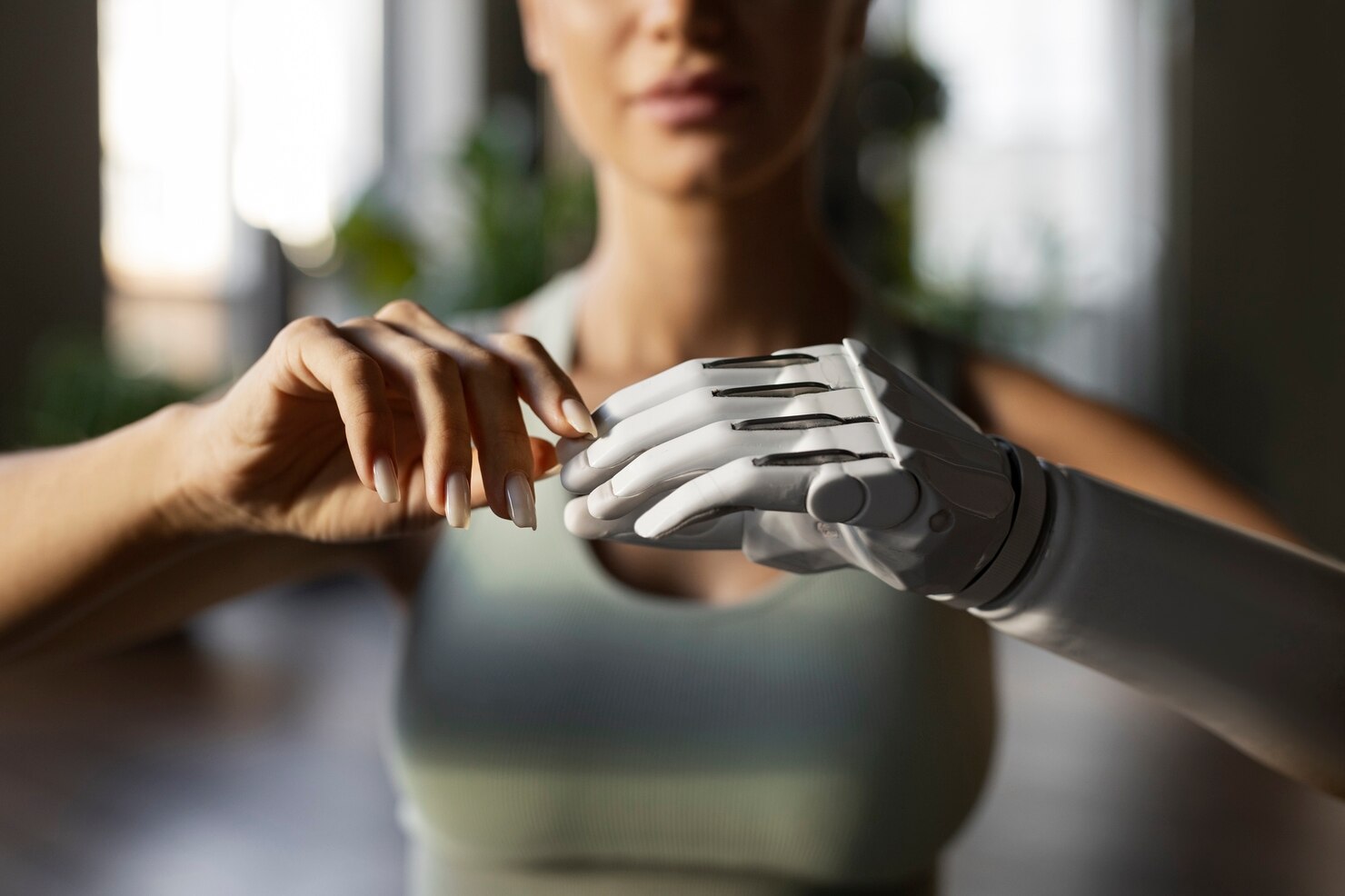
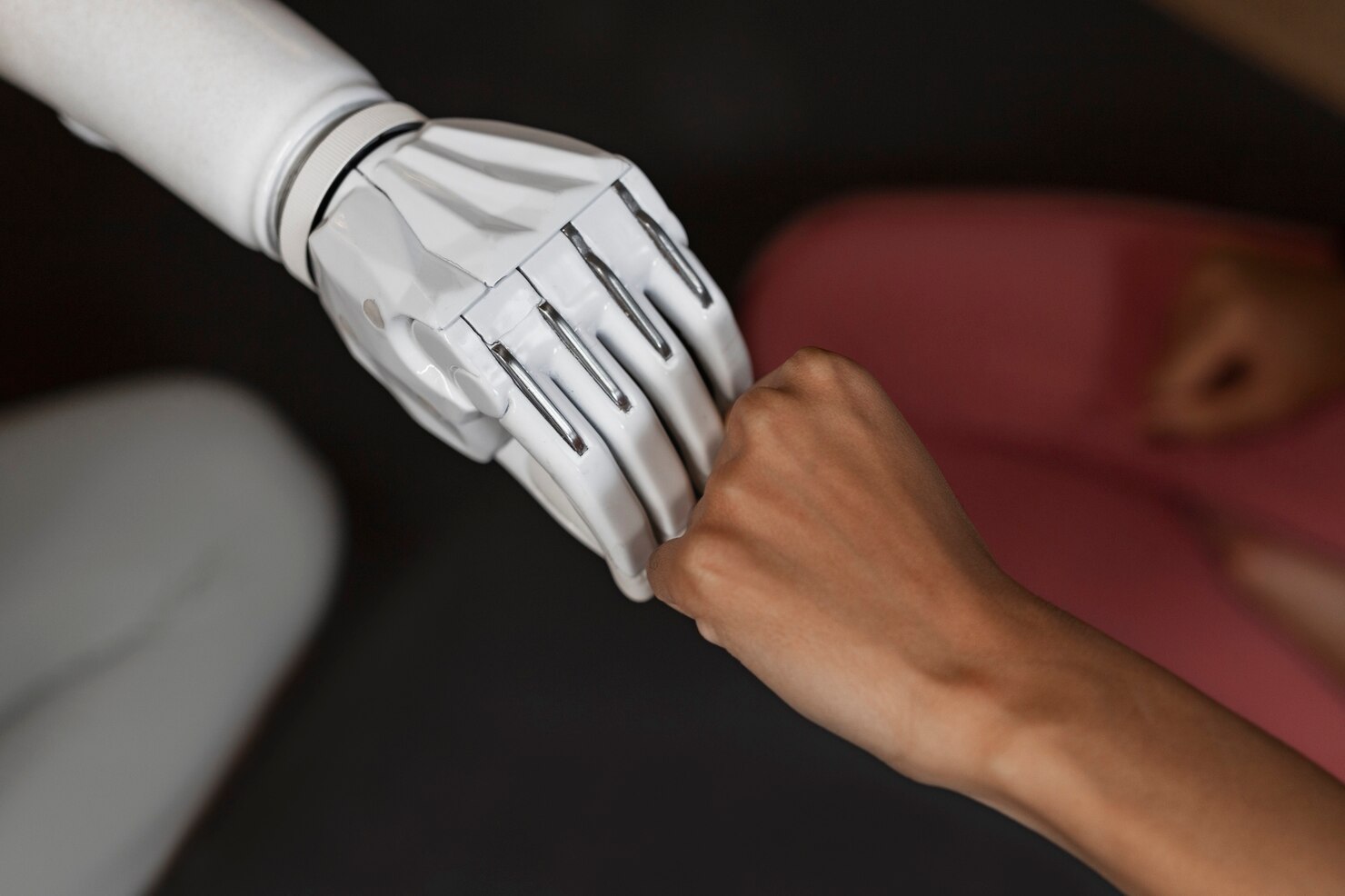
The myoelectric prostheses we can provide represent the peak of modern prosthetic technology, using sensors to detect the electrical signals from your remaining muscles to control the prosthetic hand’s movement. This allows for an intuitive experience where thinking about moving your hand triggers actual motion. We have experience providing multi-articulating hands, which offer multiple grip patterns to help you handle everything from heavy tools to delicate glassware.
An advance that makes these prostheses more responsive is pattern recognition technology. The prosthesis is programmed with your specific muscle patterns, allowing for smoother transitions between different grips. This approach reduces mental fatigue and makes your prosthesis feel like a natural extension of your body.
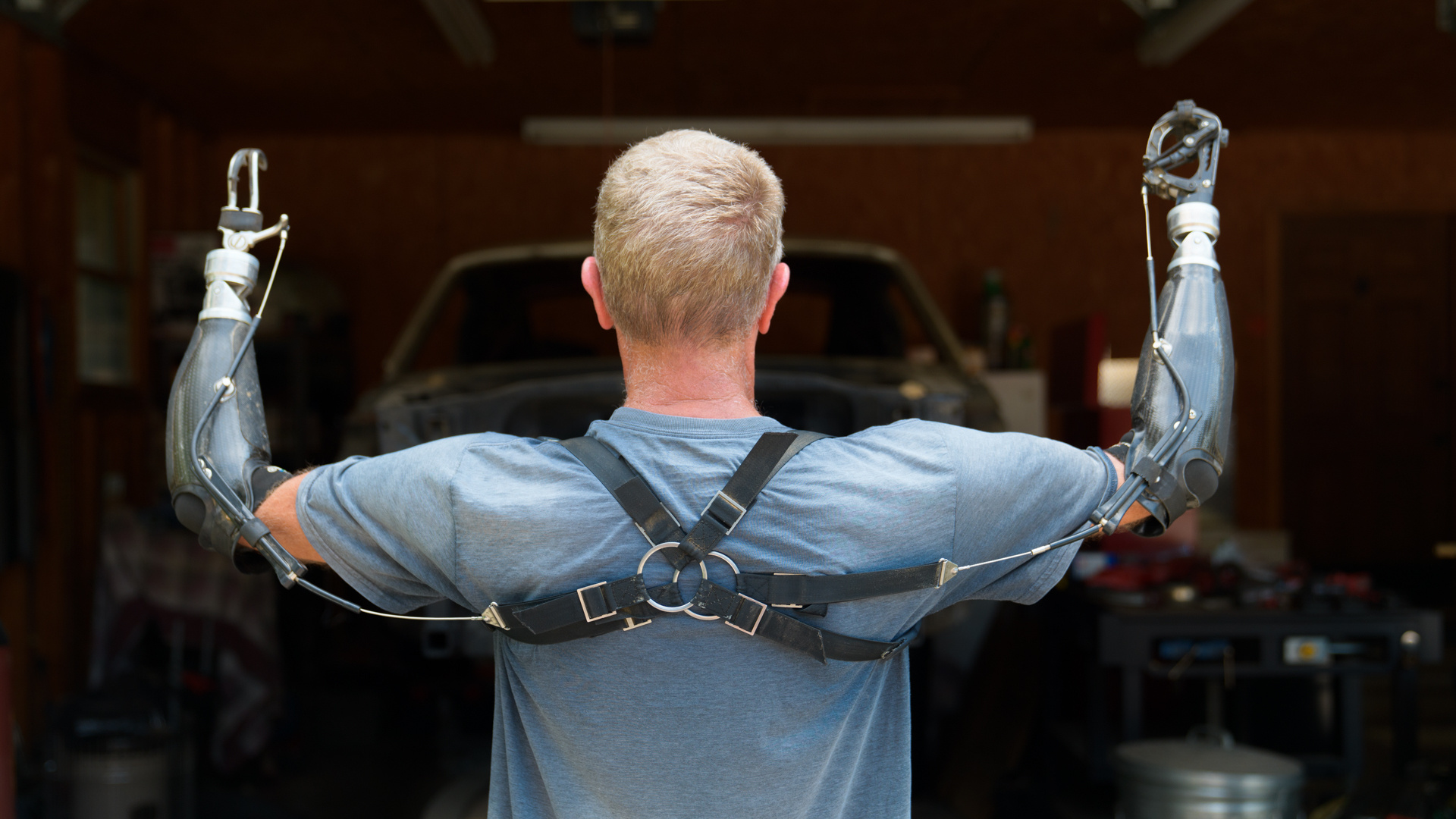
For those who prioritize durability and tactile feedback, body-powered prostheses remain a proven option. Body-powered prostheses use a comfortable harness and cable system controlled by your own shoulder and back movements. This mechanical connection provides “proprioception”—the ability to feel how much tension or pressure you are applying—making them exceptionally reliable for heavy-duty work or rugged outdoor environments.
These prostheses are incredibly versatile and easy to maintain. We offer a wide range of interchangeable terminal devices, such as specialized hooks or rugged grips, that can be swapped out depending on the job at hand. Whether you are working in a garage, on a farm, or simply need a tool that works every time without a battery, body-powered systems provide unparalleled reliability.
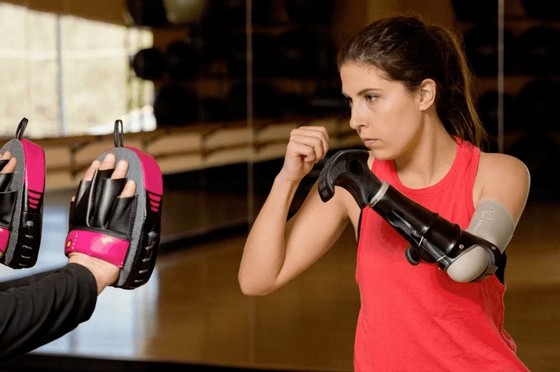
Standard prosthetic hands are great for daily life, but certain hobbies and professions require tools built for high-intensity use. We design custom activity-specific devices engineered for the exact demands of your passions, whether that’s a rock-climbing attachment, a weightlifting hook, or a custom blow-torch arm. By removing the weight and complexity of a multi-purpose hand, these devices can be lighter, more durable, and more responsive for the task at hand.
These specialized solutions also extend to the arts and recreation. We can create custom terminal devices for musical instruments, photography equipment, or cycling handlebars, ensuring you have a secure and ergonomic connection. By using task-specific gear, you can push your physical limits and enjoy your favorite activities with better control and less strain on your body.
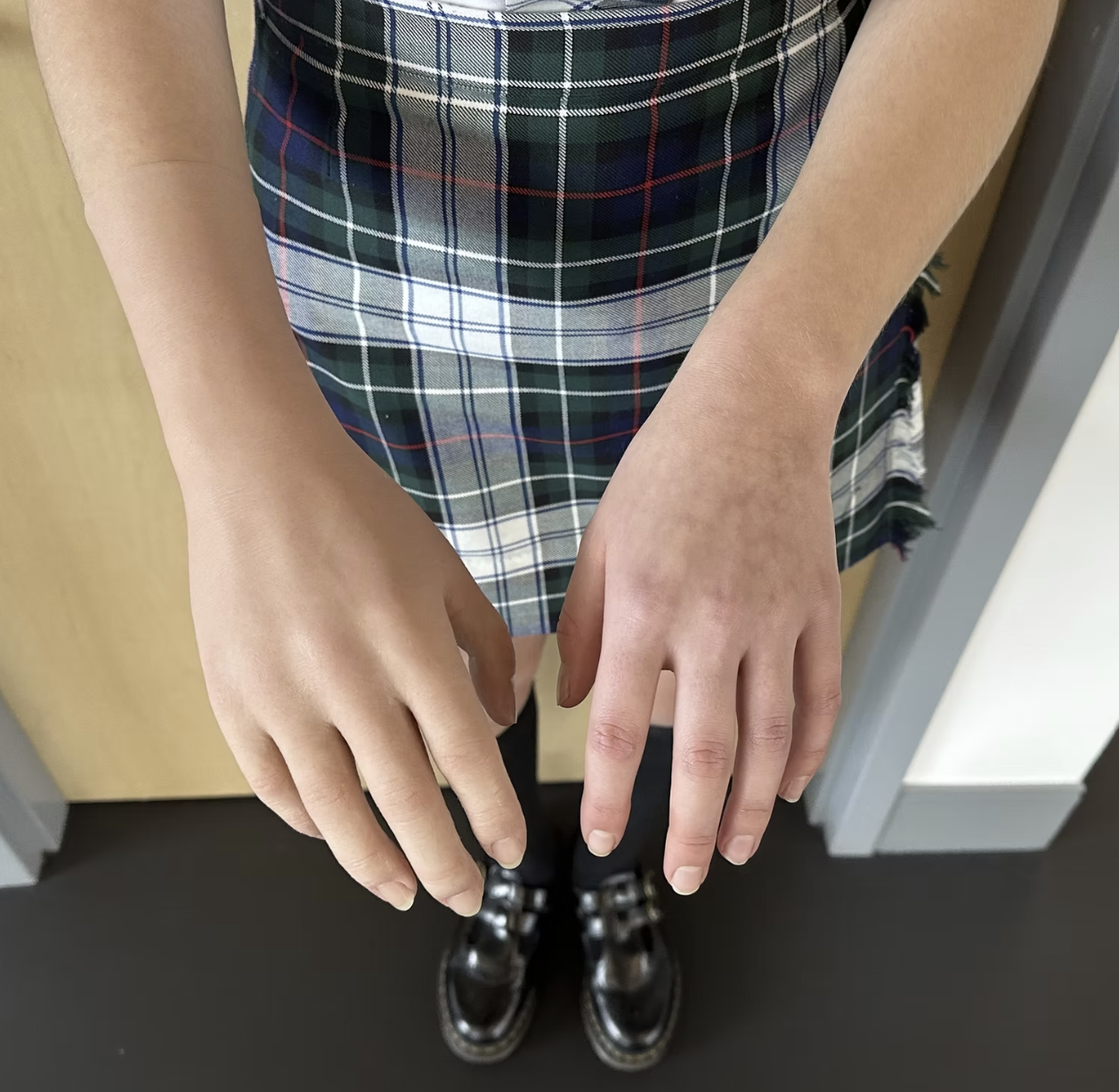
For many, the goal of a prosthesis is to move through the world without drawing attention to their limb loss. We can provide cosmetic silicone restorations that are high-definition, custom-sculpted prostheses that match your sound limb.
Beyond their lifelike appearance, these restorations provide significant functional benefits. High-quality silicone offers a natural “grip” for holding objects and provides a stable surface for tasks like typing or stabilizing paper while writing. These “passive” devices help restore your natural silhouette and body symmetry, allowing you to feel fully yourself in both social and professional environments.
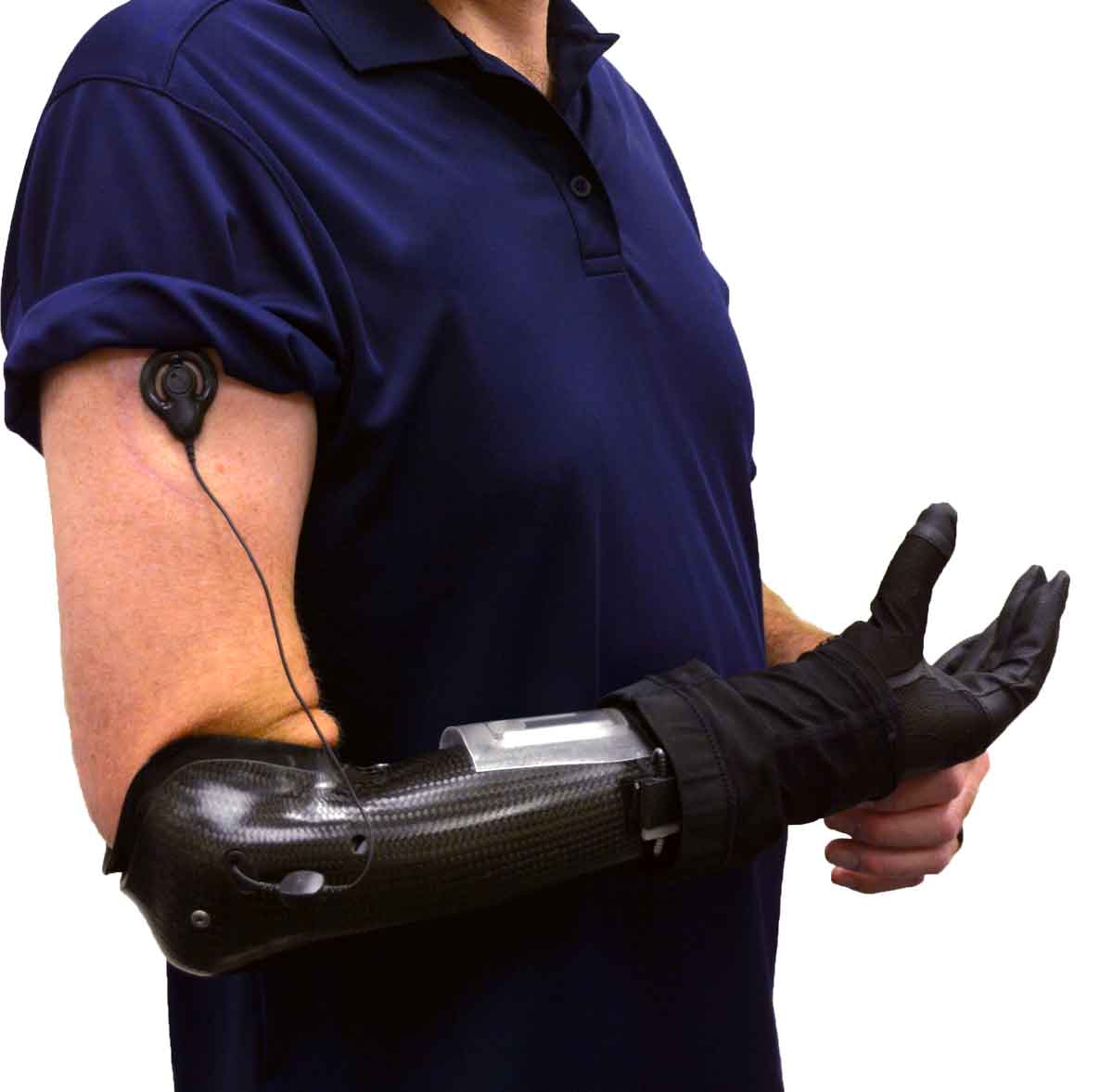
Some device types may be more suitable for specific activities than others and some individuals may need several different prosthetic devices to engage in a number of different activities. At Custom Prosthetic and Orthotic Services Ltd. we emphasize the importance of an Initial Prosthetic Assessment. Our interest is in working with our clients to determine what their functional goals are and how best to achieve them, through the use of appropriate techniques, technology and training. Experienced amputees know that if a prosthesis does not fulfill some personal requirement, it will not be worn.
There are six basic prosthetic options to consider for the person with an upper extremity amputation:
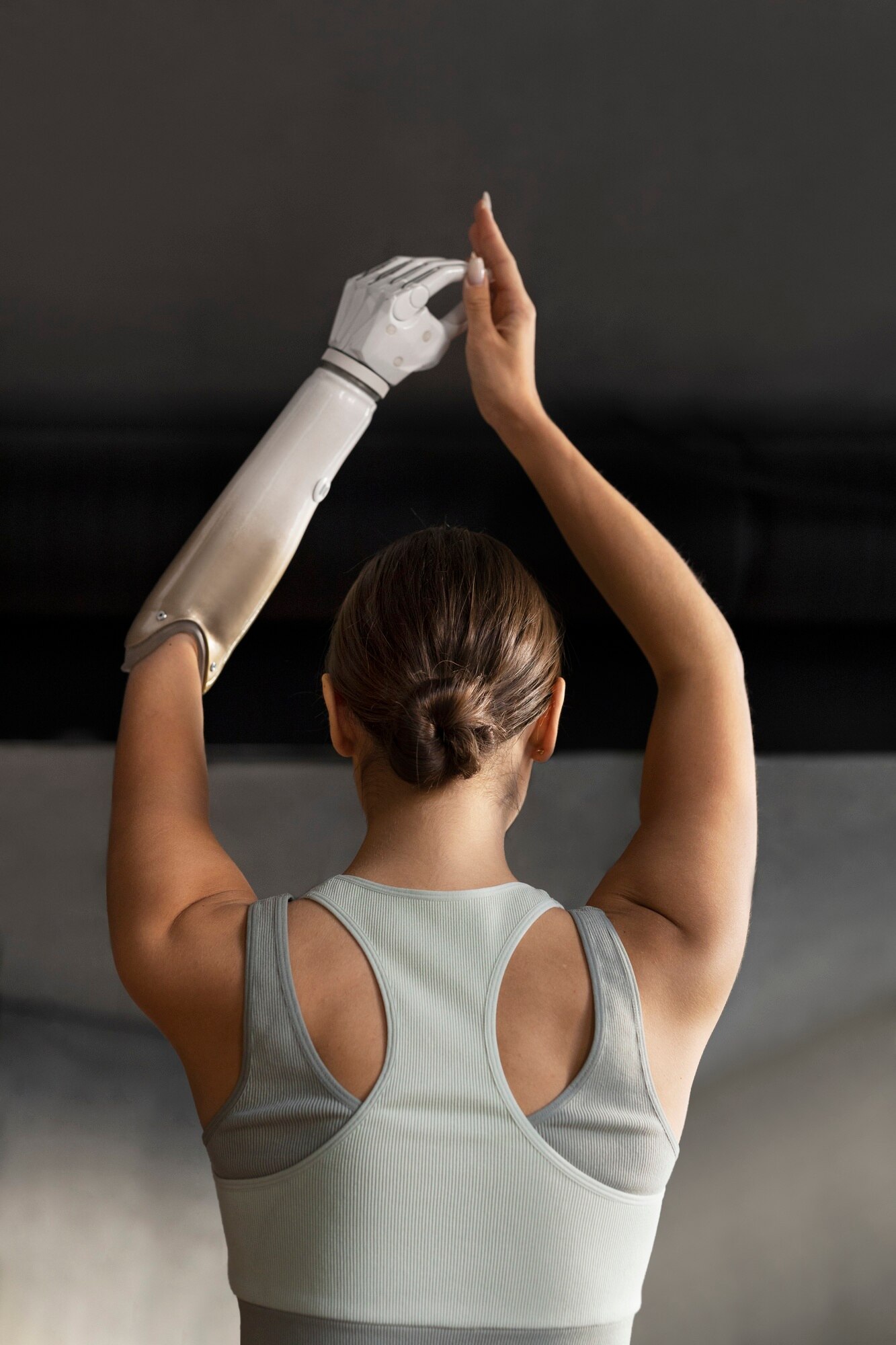
Not every person with an upper extremity amputation is a candidate for a prosthesis. Physical capabilities and limitations can be a factor, as can an individual’s development of techniques to adapt to daily tasks without the use of a prosthesis. Also, earlier unsuccessful fittings, which failed to work adequately or were painful, can contribute to an individual’s decision not to use a prosthesis.
Some upper extremity amputees who have chosen not to wear prostheses in the past have found that the advanced fitting techniques and componentry now available through an experienced Prosthetist can enhance their lives. At Custom Prosthetic and Orthotic Services Ltd.we use or resources and experience to provide our clients with a wide range of prosthetic devices and up to date technology. Contact us to discuss your options.
Cosmetic restoration, or duplication of the contralateral arm or hand, is a popular prosthetic option. A prosthesis that is similar in appearance to the portion of the limb that was lost or is missing can be fabricated and is capable of simple grasping or carrying activities. A typical passive prosthesis may have a realistic appearance but it is generally non-functional, and rarely provides the ability to grasp items.
Cosmetic restoration, particularly the outermost covering, is typically achieved using one of three materials: flexible latex, rigid PVC, or silicone. These types of prostheses are often lighter weight than other prosthetic options and require less maintenance because they have fewer moving parts than other prosthetic options.
Advantages: lightweight, minimal harnessing, low maintenance, no control cables
Disadvantages: difficult to perform activities that require bilateral grasping
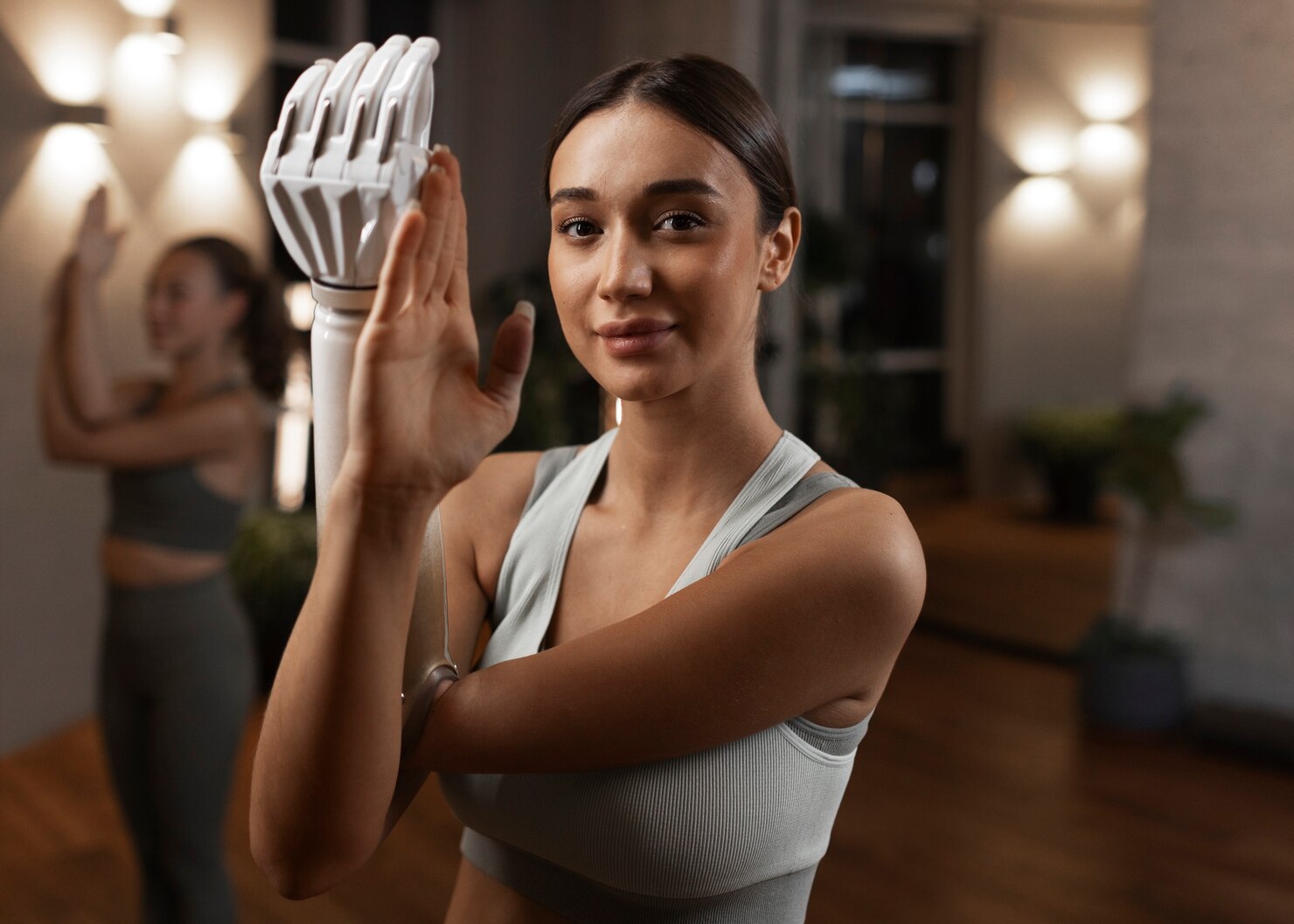
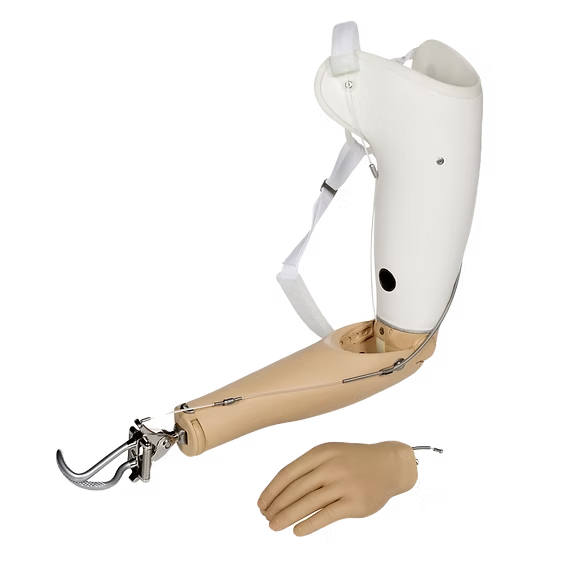
The body-powered prosthesis is also known as the conventional prosthesis and it has been available for many years. Gross body movements, generally of the shoulders, chest and upper arm, power it. These movements are captured by a harness system, which is attached to a cable that is connected to a terminal device (hook or hand). For some levels of amputation or deficiency an elbow system can be added to provide the patient additional function. The action of the control cable crossing the elbow is often used to drive the motion of the elbow joint.
For a client to be able to control a body-powered prosthesis he or she must possess at least one or more of the following gross body movements:
Glenohumeral flexion (swing the upper arm forward)
Scapular abduction or adduction (spread the back out and draw it inwards)
Shoulder depression and elevation (move the shoulder up and down)
Chest expansion (lift and expand chest)
There are several basic requirements that are generally necessary for a client to be a candidate for a body powered prosthesis:
Sufficient residual limb length
Sufficient musculature
Sufficient range of motion
There are two types of controls for body-powered hands and hooks, voluntary opening and voluntary closing: Voluntary opening uses elastics or springs to keep the device closed and gives the client grasping control even when the client is relaxed. The tradeoff for this is limited grip force, often less than 6 pounds. Voluntary closing uses elastics or springs to keep the device open and allows the patient to have substantially greater grip force, often over 50 pounds, but does not allow the client to relax without losing grasp.
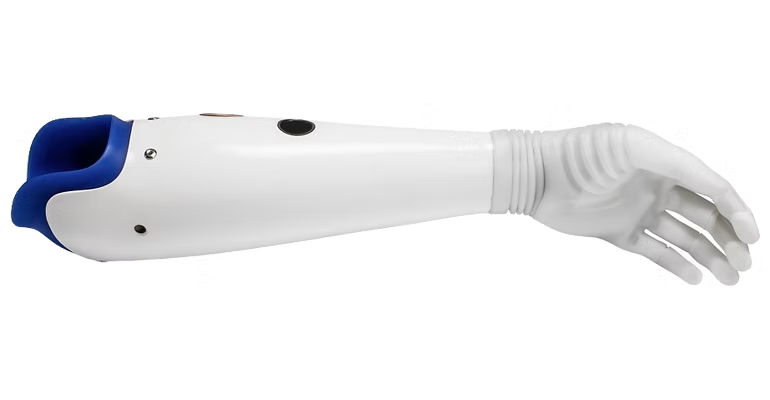
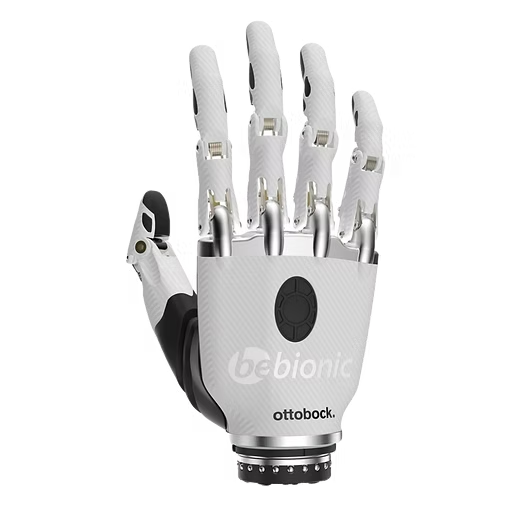
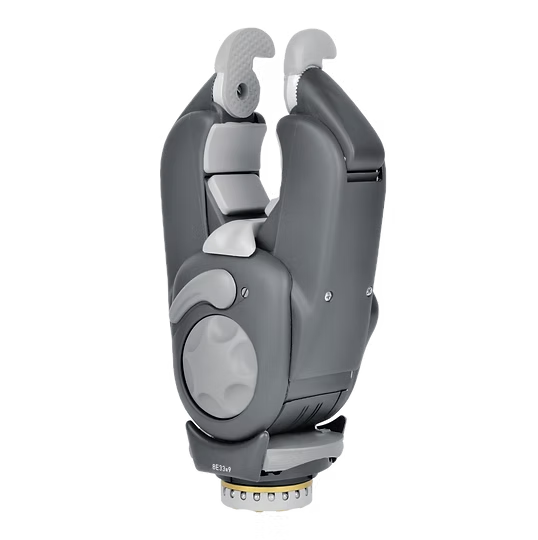
Electrically powered prostheses use small electric motors to move the prosthetic components. These motors can be found in the terminal device (hand or hook), wrist, and elbow. An electrically powered prosthesis utilizes a rechargeable battery system to power the motors. Because electric motors are used to operate hand function, grip force of the hand is significantly increased, often in excess of 20-32 pounds.
There are several ways to control this type of prosthesis (control schemes):
Myoelectric control
Servo Control
Push Button Control
Push Button Control
Harness switch Control
In most cases a single control scheme is chosen. For the more advanced/ higher-level fittings, several control schemes may be used on the same prosthesis to provide enhanced function.
Myoelectric control utilizes small electrodes resting on the surface of the skin to detect and then have amplified tiny electrical signals emanating from voluntarily controlled muscles, typically in the residual limb. These signals act as ‘switches’ to control specific functions and activities of electric motors associated with the prosthetic terminal devices, wrists, and elbows.
A hybrid prosthesis is generally fabricated for those persons with trans humeral (above elbow) amputations. It is comprised of an electrically powered component (hook/hand, wrist or elbow) together with a body-powered component (hook/hand, wrist or elbow).
Advantages: weighs less and costs less than prosthesis with electrically powered elbow and hand, ability to simultaneously flex the elbow and operate the wrist or hand
Disadvantage: similar to respective electrically powered and body powered prostheses
Some activities require a purpose-built prosthesis due to limitations in performance or susceptibility to damage of other types of prostheses.
These types of prostheses are often for recreational purposes and can encompass activities as diverse as music, water-skiing, cycling, fishing, weightlifting, and gymnastics. The only real disadvantage to this prosthetic option is that its specificity limits what other activities can be performed outside of its intended use.